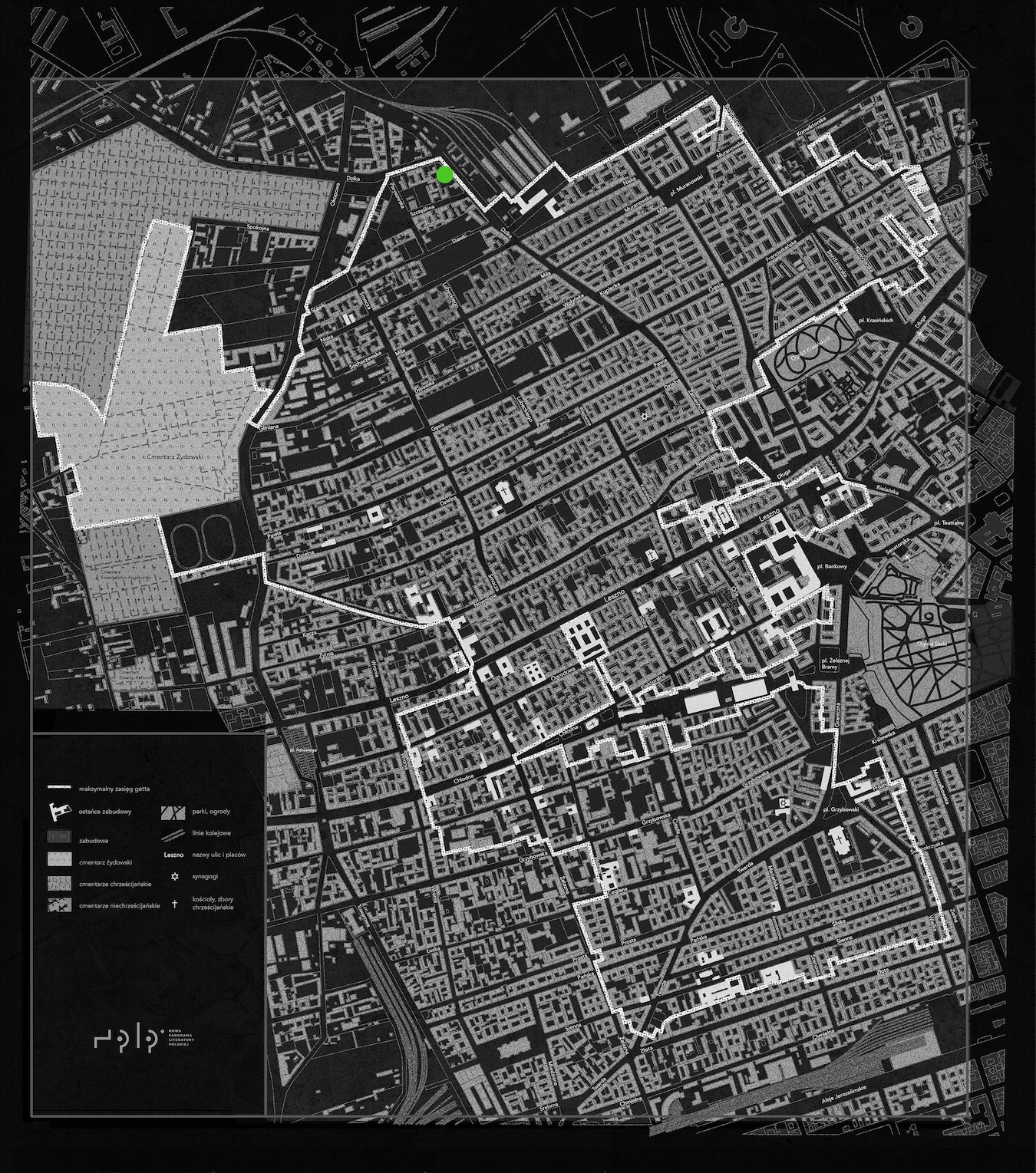
DZIKA 17
Henryk Bryskier
II, THEY
As an example, one can cite the newly built 4-story house on Dzika Street, fully inhabited, although not completely finished. After the tenants left, there was not a single room suitable for seating a caretaker, just rubble everywhere. The devastation was so great that one might have expected the brick to be demolished if the lack of care had lasted a little longer. The question is therefore, where were the security authorities? After the tenants and the caretaker left the house, the Polish police believed that the section had been excluded from the Polish neighborhood and thus eliminated from its custody, while the Jewish Order Service did not yet have access or a warrant for the section in question, because the walls along the sidewalk had not yet been set up, so a state of interregnum was created. This transition period caused colossal losses, as it was necessary to immediately begin the necessary renovations to accommodate displaced persons for the continuation. Where the caretaker closed the ground-floor shutters and gate and remained there alone. As the sole custodian of the estate to personally hand over the keys to the relevant agents at the last minute, there the condition was completely satisfactory. However, these were rare incidents. (p. 72)
Bibliografia
– Henryk Bryskier, Żydzi pod swastyką, czyli getto w Warszawie w XX wieku, Oficyna Wydawnicza ASPRA-JR, Warszawa 2006.